Robinhood Chain Network Configuration: Mainnet, Testnet, RPC and Explorer
A wallet network is more than an RPC URL. Chain ID, explorer, native currency and endpoint reliability must agree before a transaction is safe to request.
Key takeaways
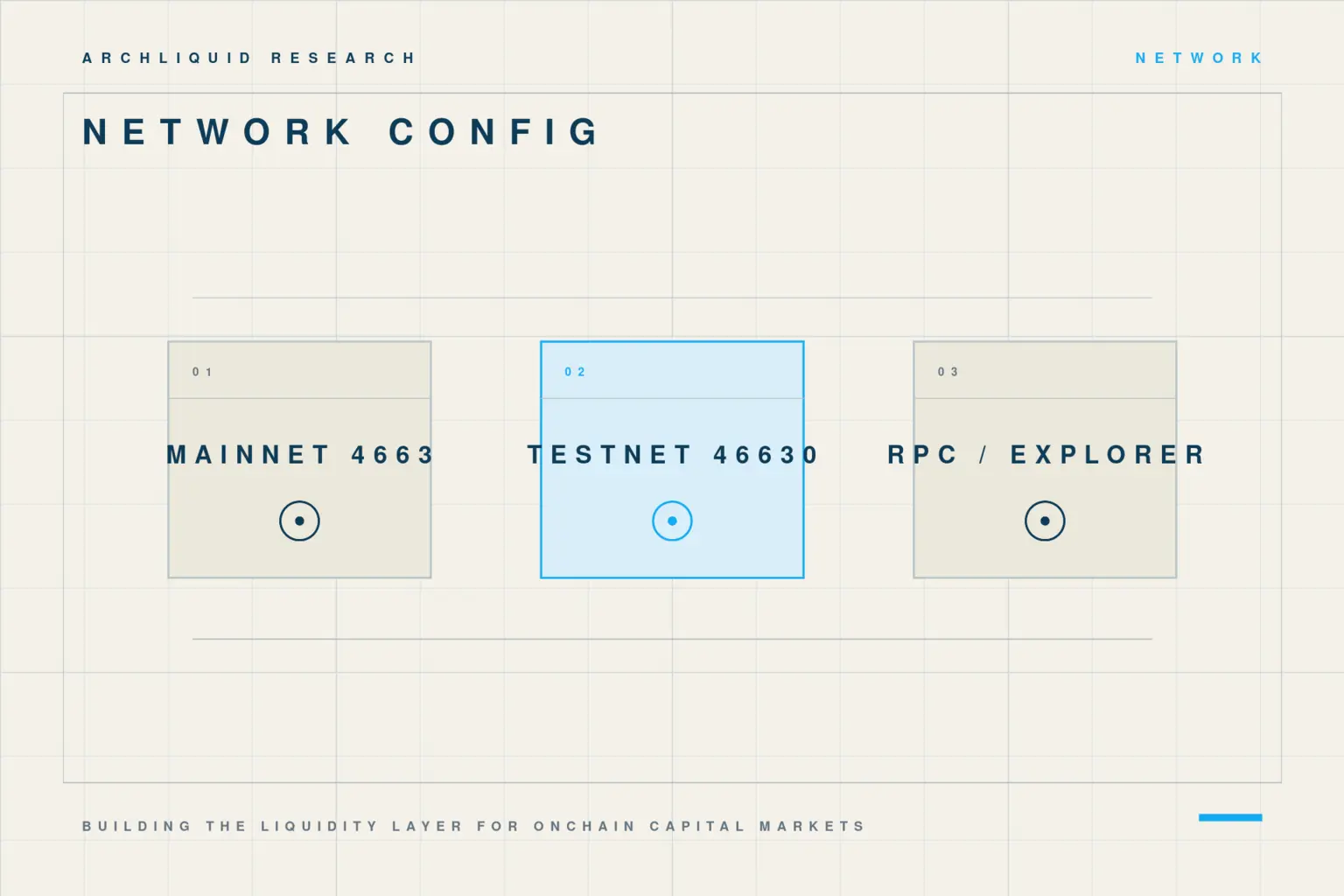
- Robinhood Chain mainnet uses chain ID 4663 and testnet uses 46630; both use ETH for gas.
- A wallet should read its active chain after connection and request a switch before enabling transactions.
- Robinhood describes its public RPCs as rate-limited development endpoints, so production applications need a dependable provider strategy.
An EIP-3085 style testnet configuration
This object uses the values published in Robinhood Chain's connection guide. A wallet still decides whether to accept the add-network request.
- Chain ID
- 46630 / 0xb626
- Currency
- ETH
- RPC
- rpc.testnet.chain.robinhood.com
- Explorer
- explorer.testnet.chain.robinhood.com
Decimal and hexadecimal forms of Robinhood Chain testnet.
Native gas currency.
Public endpoint; rate limits can apply.
Use it to inspect transactions and contracts.
{
  chainId: "0xb626",
  chainName: "Robinhood Chain Testnet",
  nativeCurrency: { name: "Ether", symbol: "ETH", decimals: 18 },
  rpcUrls: ["https://rpc.testnet.chain.robinhood.com"],
  blockExplorerUrls: ["https://explorer.testnet.chain.robinhood.com"]
}
Source: Connecting to Robinhood Chain (Robinhood Chain Documentation).
Start with the chain identifier
The chain ID is the wallet's primary network identity. Robinhood Chain mainnet is 4663 and Robinhood Chain testnet is 46630. Those values are not interchangeable, even if an application exposes similar contracts on both environments. Transactions signed for one chain must not be silently presented as transactions for the other.
A robust interface reads the wallet's active chain after every connection and account event. It compares that value with the network required by the selected protocol deployment. Read-only pages can remain visible on the wrong network, but create, approve and withdraw actions should state the mismatch and ask for an explicit switch.
Use the complete network record
Robinhood's connection guide publishes a network name, chain ID, native currency, RPC URL and block-explorer URL for mainnet and testnet. Wallet add-network requests should include that complete record. A chain name alone is display text; the numeric ID is what the wallet uses to distinguish signatures and transaction replay domains.
Both networks use ETH for transaction fees. A test token that looks dollar-denominated cannot pay gas unless the application separately sponsors transactions. Interfaces should show the ETH requirement before a user begins a multi-step flow so an approval is not left stranded when the wallet lacks gas for the final action.
Treat public RPCs as development infrastructure
The documented public RPC endpoints are convenient for wallets, scripts and initial testing, but Robinhood notes that they are rate-limited and not intended as a production reliability layer. A public page with many concurrent balance reads can hit those limits even when each user performs only one visible action.
Production applications should use a provider with explicit capacity and monitor latency, error rates and block freshness. A second provider can protect read paths, but writes and simulations should be compared carefully so the interface does not estimate against one chain head and broadcast against another stale endpoint.
Switch before simulating the transaction
The safest sequence is connect, read chain ID, request a switch if needed, wait for the wallet's chain-change event, then refresh account data and simulate. Building calldata before the switch can retain addresses, balances or fee assumptions from the previous network. A button changing color is not proof that the wallet accepted the switch.
Mobile deep links and embedded wallets can return control asynchronously. The page should preserve the intended action, recheck network and account on return, and require a fresh confirmation if either changed. That behavior also avoids treating a previously linked account as the currently selected signer.
Verify the network with a harmless read
After configuration, query the chain ID through the selected provider and inspect a documented canonical address or recent block in the explorer. This catches copied URLs, proxy misconfiguration and endpoints that answer for a different chain. The check should be part of deployment health monitoring, not only a developer setup step.
Contract addresses must remain network-scoped. A mainnet address can have no code on testnet, and a test fixture should never be labeled as its mainnet counterpart. Keeping separate manifests for 4663 and 46630 makes that distinction machine-readable throughout the application.
Sources and further reading
Sources were accessed for this publication on August 4, 2026. Product terms, networks and deployments can change; check the linked primary source before acting.
Related reading
Robinhood Chain Explained: Architecture for Onchain Capital Markets
Robinhood Chain combines Ethereum-compatible execution with dedicated market infrastructure for tokenized assets. Here is what the architecture actually provides.
Bridging RWAs to Robinhood Chain: Routes, Finality and Risk
A bridge does more than move a balance between interfaces. It changes the custody, message-finality and contract assumptions around that balance.
Robinhood Chain Governance: Council Thresholds, Timelocks and Validators
Chain governance defines who can change the system and how quickly. The published thresholds are useful only when their different powers are kept distinct.